Blog
Red Onion Oil for Hair: The Sulphur & Quercetin Science

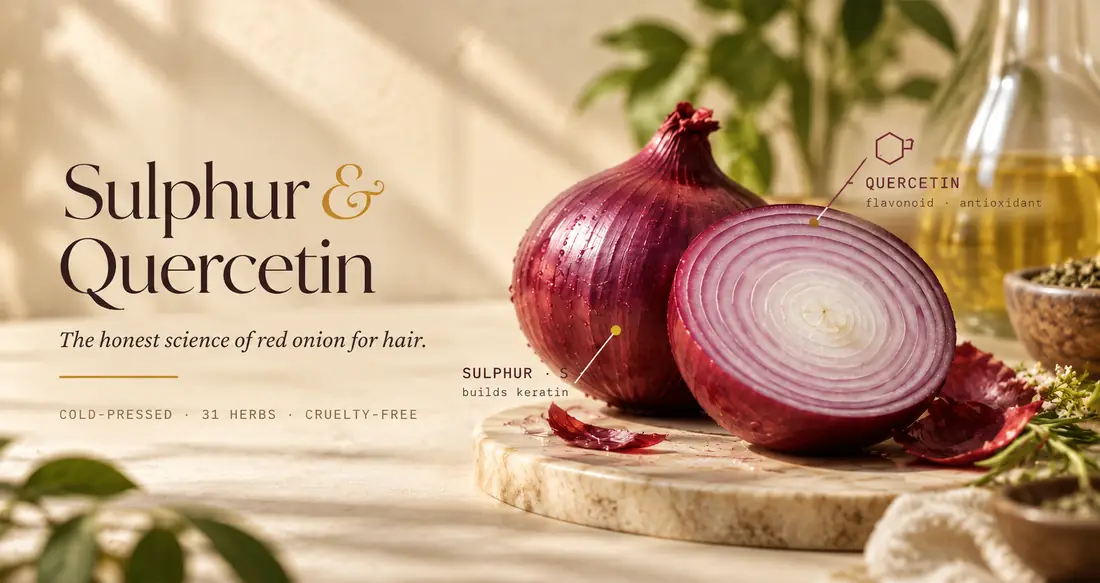
Onion for hair is one of those remedies your grandmother swore by and the internet turned into a miracle cure. The truth sits in between, and it is more interesting than either. Onion genuinely contains two things your hair and scalp can use: sulphur, a building block of the keratin your hair is made from, and quercetin, a plant antioxidant. This is the honest, science-first guide to what that means, what the research actually shows, and, just as importantly, what onion oil cannot do.
Why onion, specifically?
Alliums (onion, garlic, shallots) are unusually rich in organosulphur compounds, the same molecules responsible for onion’s smell and for making you cry when you chop one. Two components matter for hair:
- Sulphur compounds – sulphur is a core ingredient of keratin, the structural protein of hair.
- Quercetin – a flavonoid antioxidant concentrated in the outer layers of red onion in particular.
Neither is magic. But both have a plausible, well-understood role in scalp and hair health, which is why onion keeps showing up in traditional hair care across India and beyond.
Sulphur, keratin and hair strength
Your hair is roughly 90% keratin, and keratin is unusually rich in an amino acid called cysteine. Cysteine carries a sulphur atom, and neighbouring cysteines link together through disulphide bonds, the strong cross-links that give a hair strand its structural integrity and elasticity. In simple terms: no sulphur, no strong keratin.
Topically applied onion cannot add keratin to a finished hair strand, because that hair is already dead protein. What a sulphur-rich, nourishing oil can realistically do is condition the strand, reduce the surface friction that causes breakage, and support the scalp environment where new hair is actually built. That is a cosmetic benefit: real, but modest, and it is honest to call it that.
Quercetin and the scalp
Quercetin is one of the most-studied plant antioxidants. Its relevance to hair is its anti-inflammatory and antioxidant action: people with certain kinds of hair loss show higher markers of oxidative stress and inflammation around the follicle, and antioxidants like quercetin can, in principle, help calm that environment and favour the growth (anagen) phase.
The evidence here is early and mostly pre-clinical, so we will not overstate it. But it is a sound mechanistic reason to choose red onion, which carries more quercetin than paler varieties.
What the research actually shows (honestly)
Two studies are worth knowing, and worth reading with their limits in mind.
1. The 2002 onion-juice study. In a study published in The Journal of Dermatology, researchers applied crude onion juice twice daily to people with patchy alopecia areata, an autoimmune condition that causes round bald patches. After two months, 86.9% (20 of 23 patients) showed hair regrowth, versus 13.3% in the tap-water control group, with regrowth starting around two weeks. The catch: it was a small study, it used onion juice rather than oil, and it tested alopecia areata specifically, not the everyday thinning or pattern hair loss most people are dealing with.
2. Quercetin in animals. In a widely cited mouse study, quercetin injections prevented the spontaneous onset of alopecia areata: none of the treated mice developed it, versus about a quarter of the controls. Again, that is a mouse model, injected, and about alopecia areata. It tells us the mechanism is plausible; it does not prove a topical oil regrows human hair.
Our honest reading: onion is a legitimate, mechanistically sensible ingredient for scalp and hair health, with genuinely encouraging early evidence in one specific condition, and a lot still to be proven by larger human trials. That is why we position our oil as clean, strengthening scalp-and-hair care, not as a cure.
Red onion vs common onion vs onion extract powder
Not all onion ingredients are equal:
- Cold-pressed red onion – retains more of the sulphur compounds and quercetin because it is minimally processed. This is what we build around.
- Common white or yellow onion – usable, but typically lower in quercetin than red.
- Onion extract powder – a reconstituted, heavily processed form that is cheap to formulate with but can lose much of the volatile, active fraction along the way.
When you read an ingredient list, the position and form of onion tells you a lot about whether it is a hero ingredient or a label decoration.
What our herbs add
Onion does not work alone in our Advanced Red Onion Hair Oil. It sits in a base of amla, bhringraj, neem and other traditional Ayurvedic actives, a supporting cast valued for centuries in Indian hair care for scalp comfort, shine and conditioning. We describe these as cosmetic and traditional benefits, delivered in a clean, 100% vegetarian formula free from mineral oil, sulphates and parabens.
How to use onion oil for real results
Consistency beats intensity. A realistic routine:
- Frequency: 2 to 3 times a week.
- Method: massage into the scalp for a few minutes (the massage itself supports circulation), then leave for at least an hour; overnight is fine.
- Wash out with a gentle, sulphate-free shampoo so you are not stripping the scalp you just nourished.
- Give it time: think in terms of 6 to 8 weeks of regular use, in line with the hair-growth cycle. Nothing you apply topically works overnight.
What onion oil will NOT do
This is the part most brands skip, so we will say it plainly:
- It will not reverse genetic male or female pattern baldness (androgenetic alopecia). That is driven by hormones and needs evidence-based treatment; speak to a dermatologist about options such as minoxidil or finasteride.
- It will not regrow hair on a fully bald or scarred scalp.
- It is not a medicine, and is not a substitute for medical advice if you have sudden, patchy or rapid hair loss, which deserves a doctor’s assessment.
What it can realistically do is keep your scalp and existing hair in better condition: cleaner, stronger-feeling and less prone to breakage, which for many people is exactly the everyday win they are after.
Frequently asked questions
Does the smell linger?
A well-formulated oil balances the onion with aromatic herbs and essential oils, and a proper wash removes the residual smell. You should not walk around smelling of onion.
Will it stain my pillow or clothes?
Any hair oil can mark fabric. Use a towel over your pillow overnight, and wash out in the morning.
Oil or juice, which is better?
Raw juice is what the 2002 study used, but it is harsh, smelly and impractical for regular use. A cold-pressed onion oil in a nourishing base is gentler, more pleasant and easier to stay consistent with, and consistency is what actually matters.
How soon will I see a difference?
Give it 6 to 8 weeks of regular use before you judge. Early changes are usually in how hair feels and breaks, before anything is visible.
Who should avoid it?
Anyone with an onion or allium allergy, broken or irritated scalp skin, or a diagnosed scalp condition should patch-test first and check with a professional.
This article is for general education and is not medical advice. If you are experiencing significant or sudden hair loss, please consult a qualified dermatologist.
References
- Sharquie KE, Al-Obaidi HK. Onion juice (Allium cepa L.), a new topical treatment for alopecia areata. The Journal of Dermatology, 2002. PubMed
- Wikramanayake TC, et al. Prevention and treatment of alopecia areata with quercetin in the C3H/HeJ mouse model. Cell Stress and Chaperones, 2012. PubMed
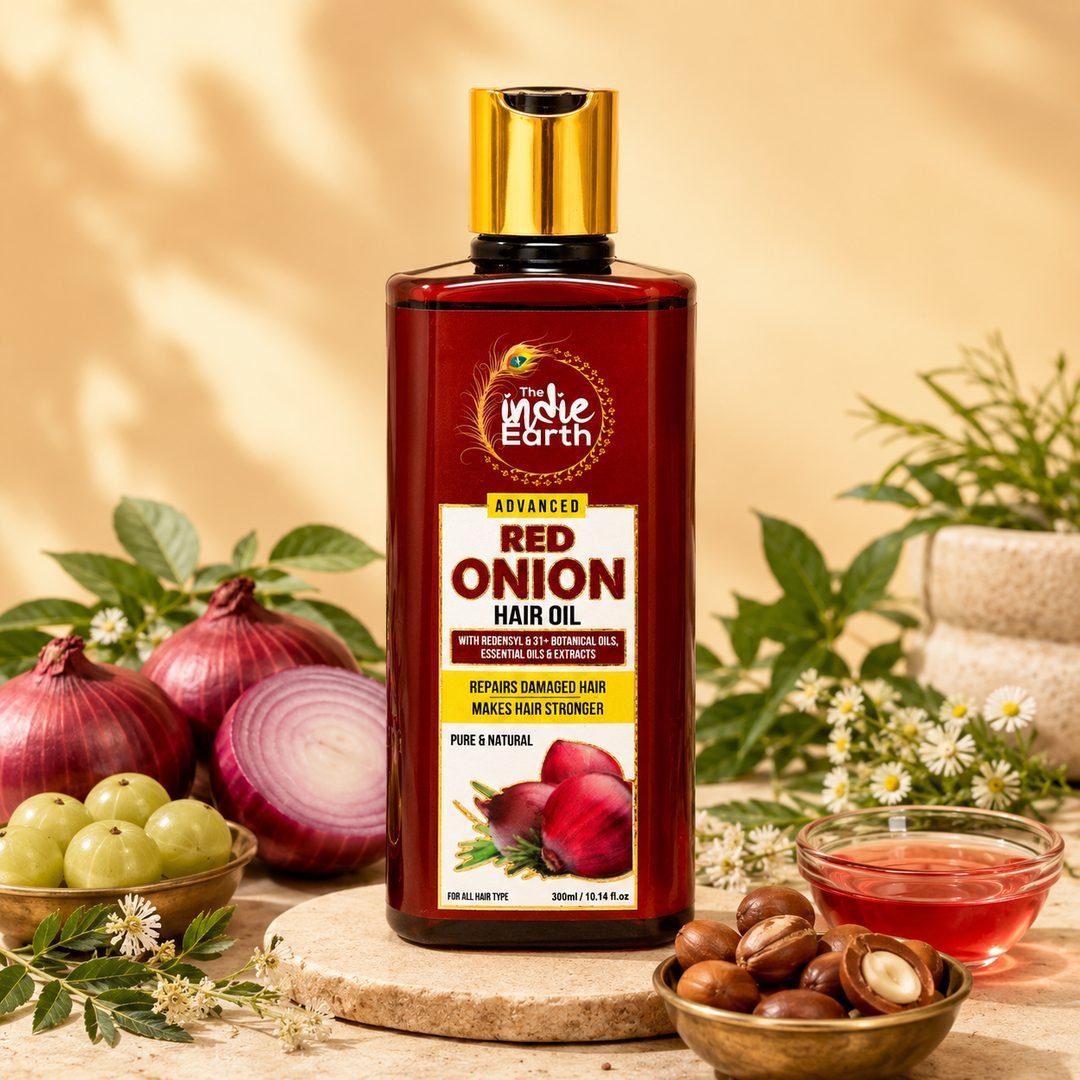
Explore our clean, honest approach to hair care: the Advanced Red Onion Hair Oil and the sulphate-free Red Onion Caffeine Shampoo.